


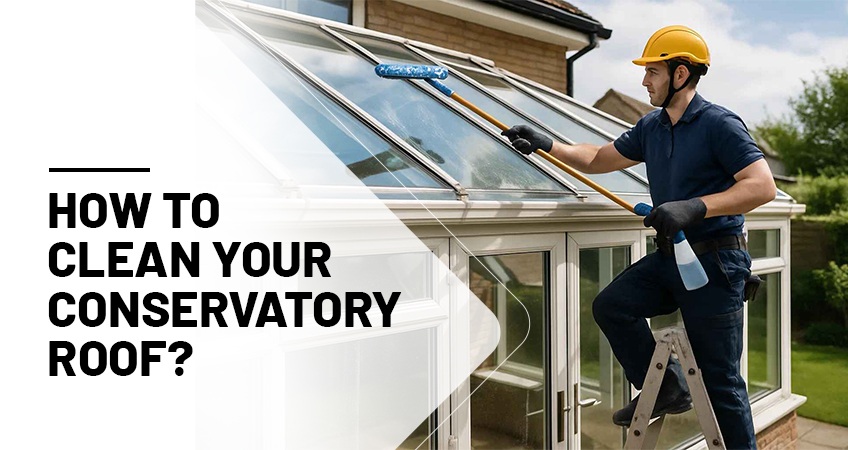
A conservatory adds light, space, and value to your home. But over time, dirt, moss, algae, and general grime can accumulate on the roof, blocking natural light and detracting from your property’s appearance. Regular cleaning not only restores your conservatory’s sparkle but also extends its lifespan and prevents costly damage.
Whether you’re tackling the task yourself or considering professional help, this guide will walk you through everything you need to know about cleaning your conservatory roof safely and effectively.
Why cleaning your conservatory roof matters
Let the light in
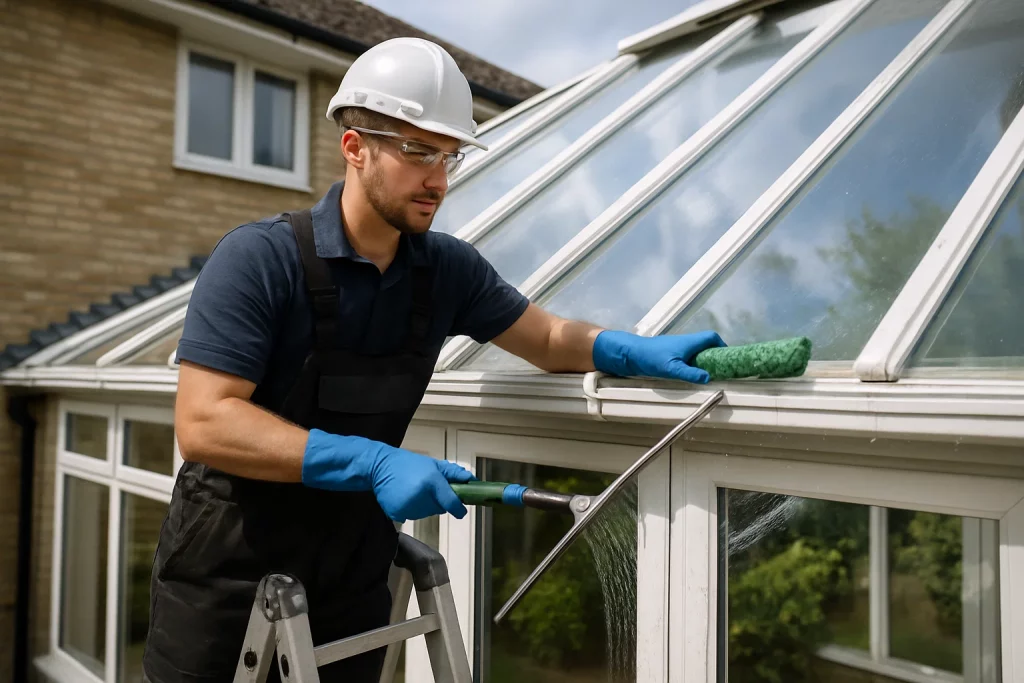
A dirty conservatory roof can block up to 30% of natural light. When algae, moss, and dirt build up on the glass or polycarbonate panels, your once-bright space becomes dull and uninviting. Regular cleaning ensures maximum light penetration, making your conservatory a more pleasant place to relax or entertain.
Protect your investment
Conservatory roofs aren’t cheap. Allowing organic matter like moss and algae to grow unchecked can lead to serious problems. These substances retain moisture, which can seep into seals and joints, causing leaks and structural damage over time. Keeping your roof clean helps prevent these issues and extends the life of your conservatory.
Boost your home’s kerb appeal
First impressions count. A grimy conservatory roof is visible from the outside and can make your entire property look neglected. A clean, well-maintained conservatory enhances your home’s aesthetic appeal and can even increase its market value.
Tools and materials you’ll need
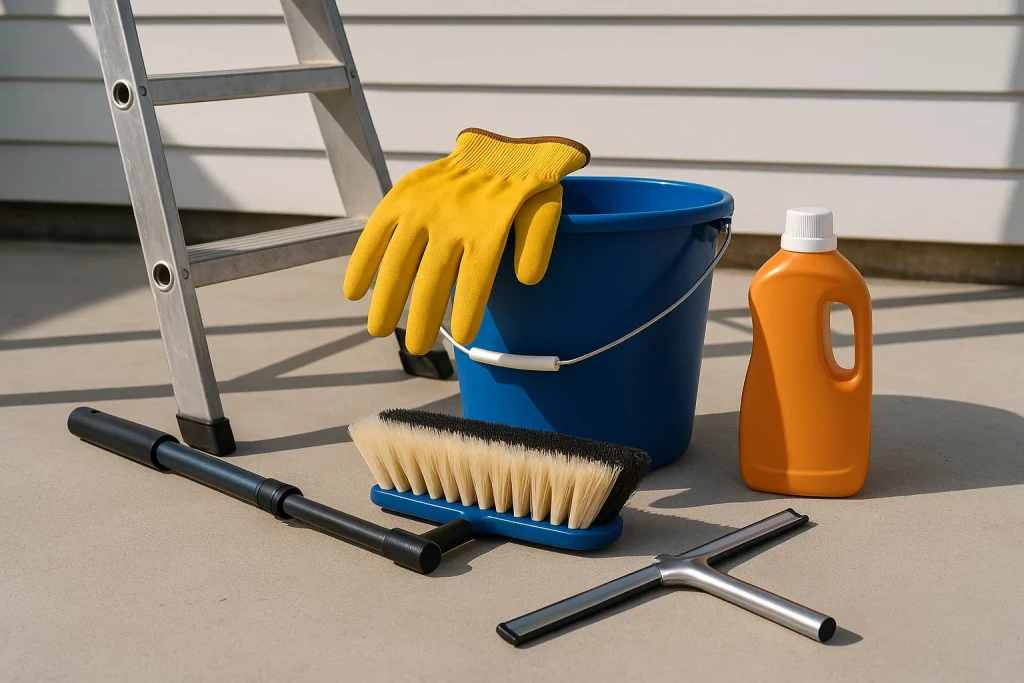
Before you start, gather the right equipment to make the job easier and safer:
- Sturdy ladder: Ensure it’s in good condition and positioned on level ground
- Safety equipment: Non-slip shoes, gloves, and consider a safety harness for higher roofs
- Soft-bristle brush or broom: For removing loose debris without scratching surfaces
- Extension pole: Essential for reaching high or awkward areas
- Mild detergent or conservatory cleaning solution: Avoid harsh chemicals that can damage roof materials
- Bucket: For mixing your cleaning solution
- Non-abrasive sponge or cloth: For scrubbing without causing damage
- Garden hose with adjustable nozzle: For rinsing (avoid high-pressure settings)
- Squeegee or soft rubber blade: For a streak-free finish
- Microfiber cloths: Perfect for drying and polishing
Step-by-step guide to cleaning a conservatory roof
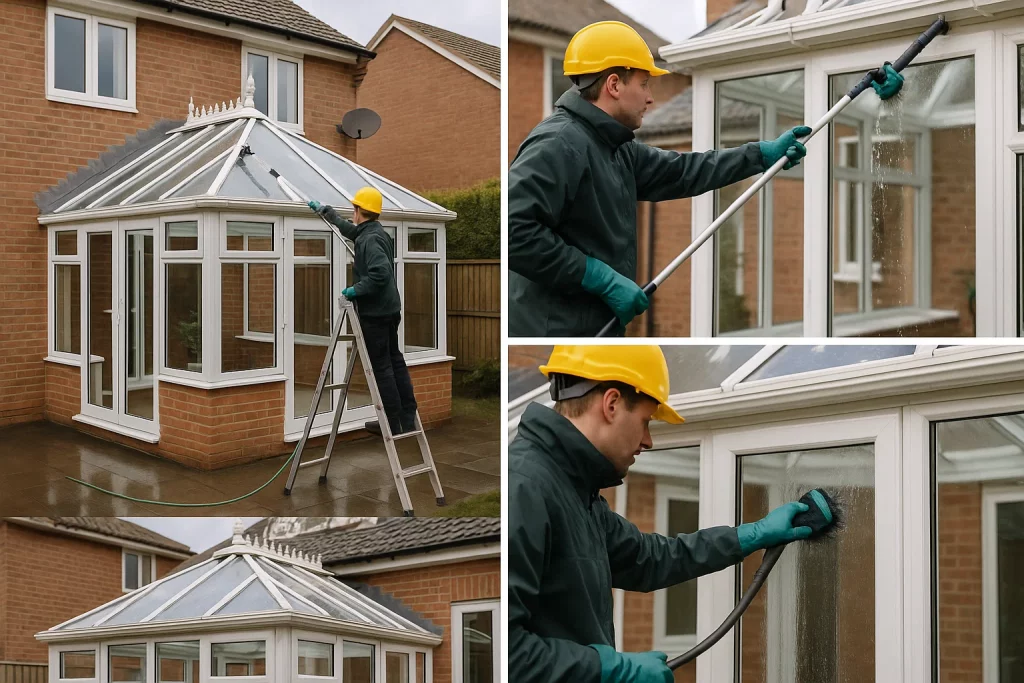
Step 1: Safety first
Working at height is inherently risky. Before you climb that ladder, take these precautions:
- Check your ladder is stable and positioned on firm, level ground
- Have someone hold the ladder or work with a partner
- Wear appropriate footwear with good grip
- Consider using a safety harness if working on steep or high roofs
- Check the weather forecast and avoid cleaning on windy or wet days
- Never overreach—move the ladder instead
If you’re uncomfortable working at height or your conservatory roof is particularly high or steep, it’s worth hiring professionals like Cleancore UK who have the proper equipment and insurance.
Step 2: Remove loose debris
Start by clearing away leaves, twigs, and other debris from the roof surface. Use a soft-bristle brush or broom attached to an extension pole to gently sweep away accumulated material. Pay particular attention to valleys, corners, and areas where the roof meets the walls, as debris tends to collect in these spots.
This initial sweep prevents you from simply spreading dirt around when you start washing.
Step 3: Prepare your cleaning solution
Mix a mild detergent or specialized conservatory cleaning solution with warm water in your bucket. Follow the manufacturer’s instructions for the correct dilution ratio. If using washing-up liquid, a few squirts in a bucket of warm water should suffice.
Avoid bleach, ammonia, or abrasive cleaners, as these can damage roof materials, harm surrounding plants, or leave residues that attract more dirt.
Step 4: Apply the cleaning solution
Using your soft brush, sponge, or cloth, apply the cleaning solution to the roof in sections. Work from top to bottom to prevent dirty water running over areas you’ve already cleaned. Gently scrub in circular motions, paying extra attention to stubborn stains, algae spots, or bird droppings.
For hard-to-reach areas, attach your brush to an extension pole. Be patient—sometimes stains need a bit of soaking time before they’ll shift.
Step 5: Tackle stubborn stains and algae
Green algae and black spots can be particularly persistent. For these problem areas, you may need a specialized algae remover or a slightly stronger concentration of your cleaning solution. Apply the product, let it sit for the recommended time (usually 10-15 minutes), then scrub gently with your soft brush.
Never use a pressure washer on your conservatory roof. The high-pressure water can damage seals, force water into joints, crack glass or polycarbonate panels, and cause leaks that lead to expensive repairs.
Step 6: Rinse thoroughly
Once you’ve scrubbed the entire roof, it’s time to rinse away all traces of cleaning solution and loosened dirt. Use a garden hose with a gentle spray setting, working from top to bottom. Make sure you rinse thoroughly, as any soap residue left behind will attract more dirt and create streaks.
Step 7: Dry and polish
For a professional finish, use a squeegee or soft rubber blade to remove excess water, working in overlapping strokes from top to bottom. Follow up with microfiber cloths to dry any remaining moisture and buff the surface to a streak-free shine.
This final step might seem unnecessary, but it prevents water spots and gives your conservatory roof that sparkling, just-cleaned appearance.
Special considerations for different roof materials
Glass conservatory roofs
Glass roofs are the most popular choice and relatively straightforward to clean. The techniques described above work perfectly for conservatory glass roof cleaning. If your conservatory has self-cleaning glass panels (such as Pilkington Activ), the special coating reduces the buildup of dirt through photocatalytic and hydrophilic properties. However, even self-cleaning glass surfaces benefit from occasional manual cleaning for tougher stains.
Polycarbonate conservatory roofs
Polycarbonate is more prone to scratching than glass, so extra care is needed. Always use soft, non-abrasive materials when cleaning polycarbonate roof panels. Never use abrasive cleaners, scouring pads, or stiff brushes. A gentle touch with mild detergent and plenty of water is the key to keeping polycarbonate looking good without causing damage.
Professional cleaning vs. DIY
When to consider professional help
While DIY cleaning is perfectly feasible for many homeowners, there are situations where hiring professionals makes more sense:
- Your conservatory roof is particularly high or steep
- You’re uncomfortable working at height
- The roof is heavily soiled or has significant algae growth
- You lack the time or physical ability to do the job safely
- Your roof requires specialized equipment to access
Professional exterior cleaning companies like Cleancore UK have experience, proper safety equipment, commercial-grade cleaning solutions, and insurance coverage. They can complete the job quickly and safely, often achieving better results than DIY methods.
The DIY advantage
Cleaning your conservatory roof yourself offers several benefits. You’ll save money on professional fees, work to your own schedule, and gain satisfaction from maintaining your home. For conservatories with easy access and moderate soiling, DIY cleaning is often the practical choice.
Maintaining your clean conservatory roof
Once you’ve invested time and effort into cleaning your conservatory roof, you’ll want to keep it looking good for as long as possible.
Regular light cleaning of conservatory glass roof and conservatory windows
Rather than waiting for heavy buildup, give your conservatory roof a light clean every few months. A quick sweep to remove leaves and debris, followed by a rinse with the garden hose, takes just 15-20 minutes and prevents serious grime accumulation.
Trim overhanging branches
Trees provide lovely shade, but overhanging branches drop leaves, sap, and debris onto your conservatory roof. They also block sunlight, creating damp conditions where algae thrives. Trimming back branches reduces the cleaning burden and allows more light into your conservatory.
Clean gutters regularly
Blocked gutters can cause water to overflow onto your conservatory roof, leading to staining and accelerating algae growth. Make gutter cleaning part of your regular maintenance routine, particularly during autumn when leaves are falling.
Address stains promptly
The longer stains sit on your conservatory roof, the harder they become to remove. If you notice bird droppings, tree sap, or other marks, clean them off as soon as possible to prevent permanent staining.
Frequently asked questions
How often should I perform conservatory cleaning?
Most conservatory roofs benefit from a thorough clean twice a year—once in spring and again in autumn. However, the frequency depends on your location and surroundings. Conservatories near trees or in areas with heavy pollution may need more frequent cleaning.
Can I use a pressure washer on my conservatory roof?
No. Pressure washers are not suitable for conservatory roof cleaning as they can force water into seals and joints, crack glass or polycarbonate panels, and cause leaks. Stick to gentle cleaning methods with a standard garden hose.
What’s the best way to remove bird droppings?
Soak bird droppings with warm, soapy water for several minutes to soften them, then gently wipe away with a soft cloth. Never scrape at dried droppings, as this can scratch the roof surface.
Will cleaning products harm my plants?
Mild detergents and specialized conservatory cleaners are generally safe for surrounding plants when diluted properly. However, it’s wise to rinse nearby plants with clean water after cleaning to remove any soap residue.
Can I walk on my conservatory roof?
Most conservatory roofs are not designed to bear the weight of a person. Walking on the roof can cause cracks, break seals, or even result in a complete panel failure. Always clean from a ladder or use professional access equipment.
How do I prevent algae from returning?
Regular cleaning is your best defense against algae. Some homeowners apply algae-inhibiting treatments after cleaning, which can extend the time between cleans. Ensuring good drainage and trimming overhanging foliage also helps reduce algae growth.
Keep your conservatory looking its best
A clean conservatory roof transforms your space, flooding it with natural light and enhancing your home’s appearance. With the right tools, techniques, and a bit of elbow grease, you can tackle this task yourself and enjoy the results for months to come.
However, if you’d prefer to leave the job to the experts, Cleancore UK offers professional exterior cleaning services throughout North Yorkshire and beyond. Our experienced team uses specialized equipment and techniques to safely restore your conservatory roof to its former glory, with outstanding results every time.
Ready to bring back the sparkle?
Contact Cleancore UK today for a free, no-obligation quote. Let us handle the hard work while you enjoy a brighter, cleaner conservatory.